Siding does two jobs at once: it finishes the look of your home and it's the first layer shedding water, wind, and impact away from the structure underneath. When siding is damaged, the problem isn't only cosmetic — it's an opening for moisture to reach the sheathing and framing behind it. Catching siding trouble early keeps a repair small.
Visible signs of siding damage
The clearest signs are the ones you can see from the ground. Look for boards or panels that are cracked, holed, warped, or buckling, and for trim or corner boards that are splitting or rotting. Siding that has come loose and is flapping or gapping at the seams is no longer shedding water the way it should. Discoloration, dark streaks, or green algae growth in a concentrated area can point to moisture being held against the surface.
Hidden clues: paint, caulk, and interior walls
Not every sign is on the outside. Peeling paint or crumbling caulk around windows, doors, and trim often means moisture is moving behind the siding. Inside, a wall that feels soft, a stain that appears near the top of a room, or a faint mildew smell can all trace back to a siding leak above. If any of these show up, it's worth having the exterior inspected to find the source.
Storm and impact damage
Connecticut storms throw a lot at siding — wind that lifts and loosens panels, hail that dents or punctures, and fallen branches that crack sections outright. After a storm, walk the perimeter and look for fresh dents, new gaps at the seams, or panels that have shifted out of place. Hail damage isn't always obvious from the ground, so a closer inspection helps document what's there if you end up filing a claim.
What a siding repair involves
A repair starts with a walkthrough of the exterior to flag every damaged panel and piece of trim. From there the scope depends on what's wrong: a cracked panel is removed and replaced with matching material, loose siding is re-secured and re-sealed, and damaged trim or corner boards are repaired or replaced so water can't enter the joints. Wherever possible, replacement panels are matched to your existing color and profile so the repair blends in.
Matching existing material
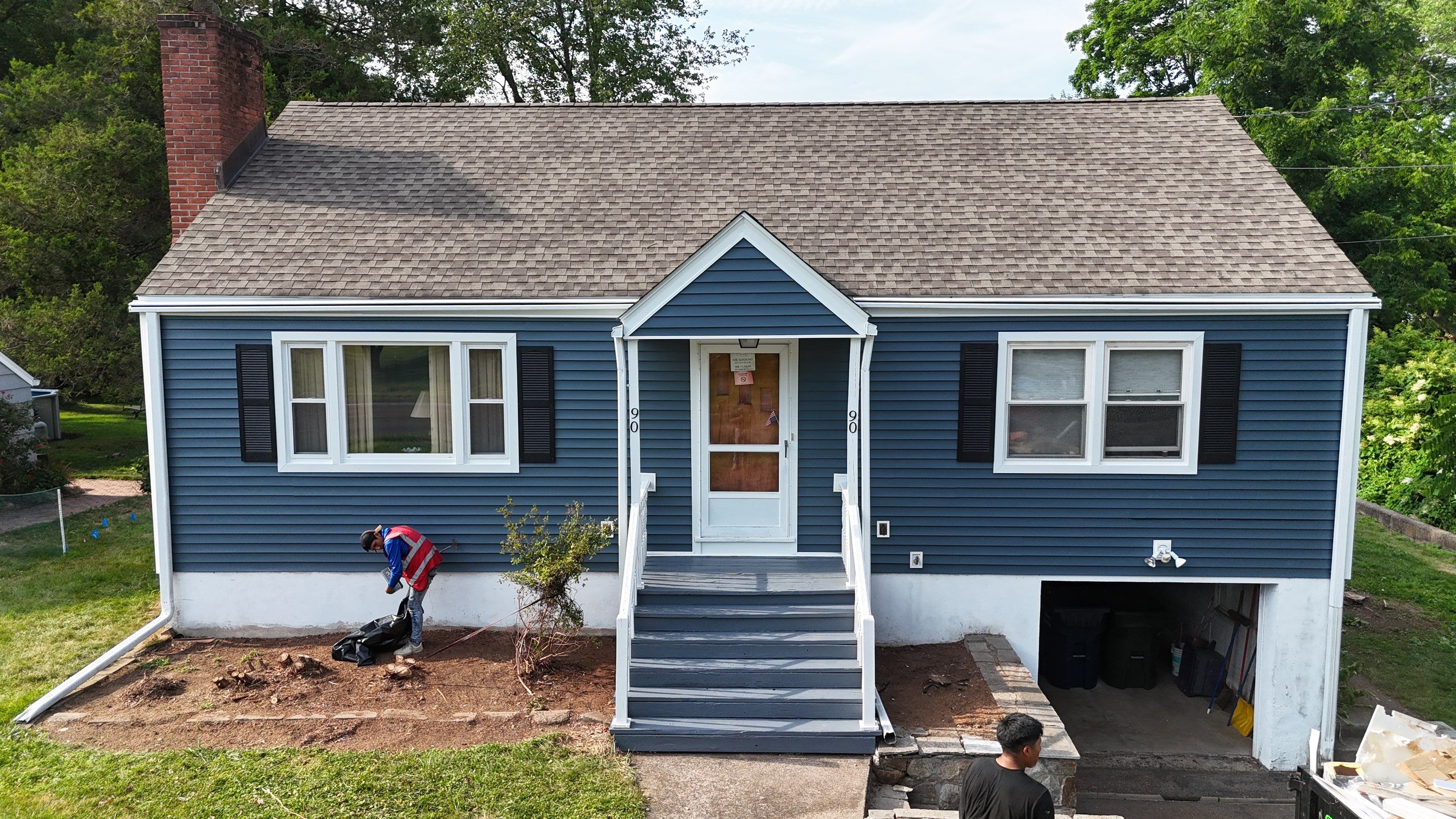
We work with vinyl siding, the most common exterior across Connecticut neighborhoods, and source replacement panels in a matching color and profile. If the exact color has been discontinued, we'll talk through the options with you before proceeding — the goal is a repair that looks intentional, not patched.
When repair isn't enough
A few damaged panels are a repair. Widespread cracking, large sections that have warped, or a wall where the siding is failing across its full height may point to a bigger conversation. We inspect first and give you an honest assessment either way, so you're not pushed toward more work than you need.
We handle siding repairs for homeowners across our service area, including Southington, West Hartford, and Meriden. If you've spotted something on your exterior, see our siding repair service or request a free estimate.