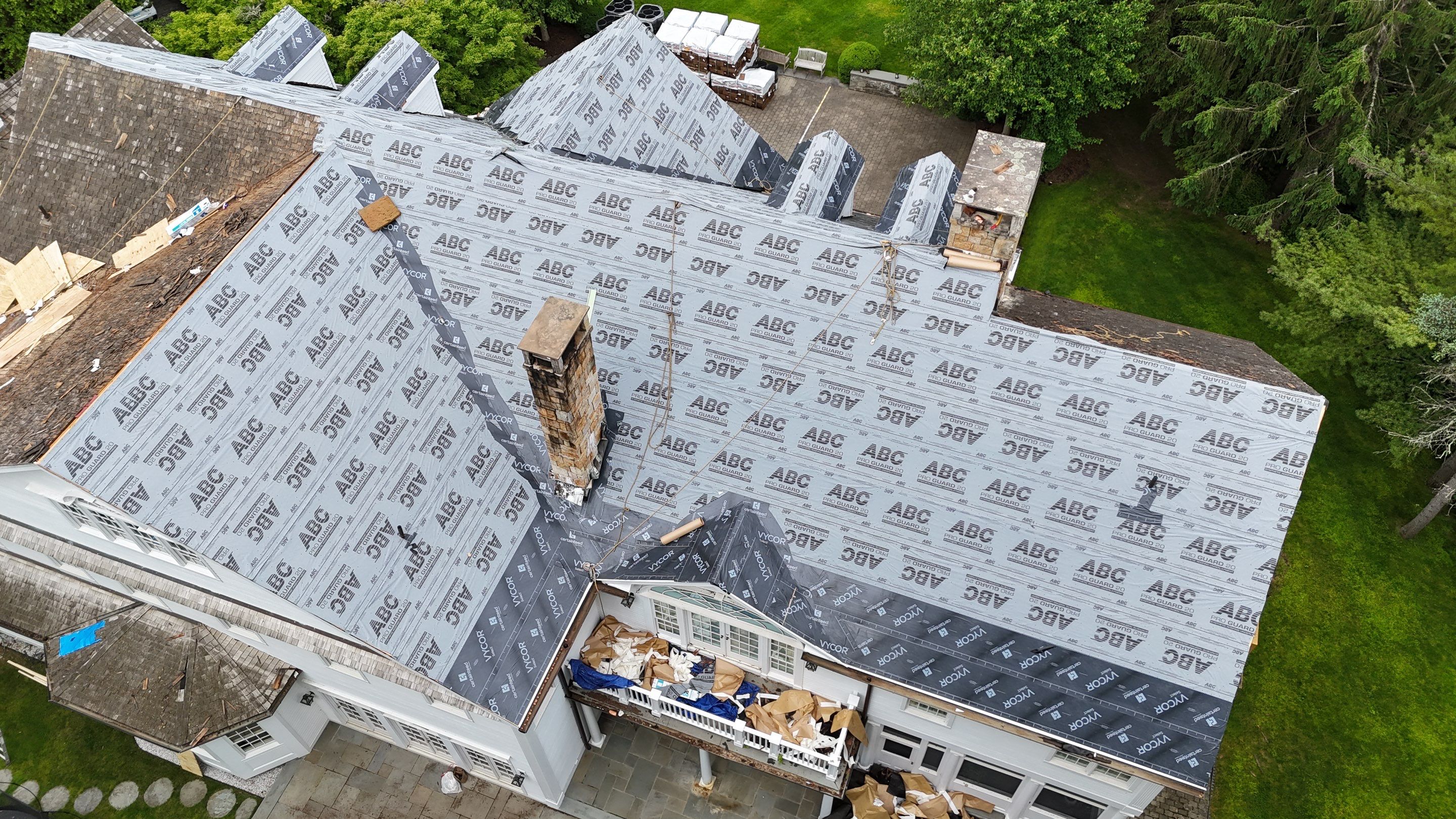

A roof rarely fails all at once. In Connecticut, wear tends to build slowly through freeze-thaw cycles, heavy snow, ice dams, and wind-driven rain — the kind of damage that's easy to miss from the ground until water is already inside the house. Knowing the early signs helps you catch a problem while it's still a repair instead of a full replacement.
Water stains and active leaks
A brown or yellow ring on a ceiling, a damp spot in an attic, or a musty smell near the top of a wall all point to water finding a way in. Even a small, occasional leak — one that only shows up during a hard rain or when snow melts — means a seam or seal has failed somewhere on the roof. Leaks rarely stay small in a Connecticut climate, so it's worth having the area inspected sooner rather than later.
Missing, cracked, or curling shingles
Asphalt shingles are the most common residential roof across Waterbury and the surrounding towns, and they tell you a lot about roof health. Shingles that are cracked, curling at the edges, losing their granules, or gone entirely leave the underlayment exposed. After any strong wind event, take a walk around the house and look for shingle pieces on the ground or bare patches on the roof slope.
Granules in the gutters
If your gutters are filling up with a coarse, sand-like grit, that's shingle granule being shed. A small amount is normal on an aging roof, but a sudden increase means the protective surface is wearing thin and the shingles may be nearing the end of their useful life.
Sagging or uneven roof lines
A roof should look straight along its ridges and valleys. Any dip, wave, or sag can mean the decking underneath is softening from prolonged moisture, or that a structural member has weakened. A sagging roofline is one of the clearer signs that you shouldn't wait to have it looked at.
Flashing and seal failures around penetrations
Chimneys, skylights, vent pipes, and roof valleys are the most common leak points because they break the roof plane. If the metal flashing is lifting, rusted, or pulling away from the surface, or the sealant has cracked and shrunk, water has an easy path in. These are often the first places to fail and the easiest to repair if caught early.
What to do when you spot these signs
If you notice any of the above, the next step is an honest, on-site inspection. We get on the roof, identify exactly what's going on, and tell you plainly whether it's a targeted repair or something more. We document what we find so you understand the scope before any work begins — and if the damage came from a storm, that same documentation can support an insurance claim.
We help homeowners across our service area, from Waterbury out to Southington, New Britain, Bristol, and beyond. If you'd like an honest assessment, see our roof repair service for details or request a free estimate.